



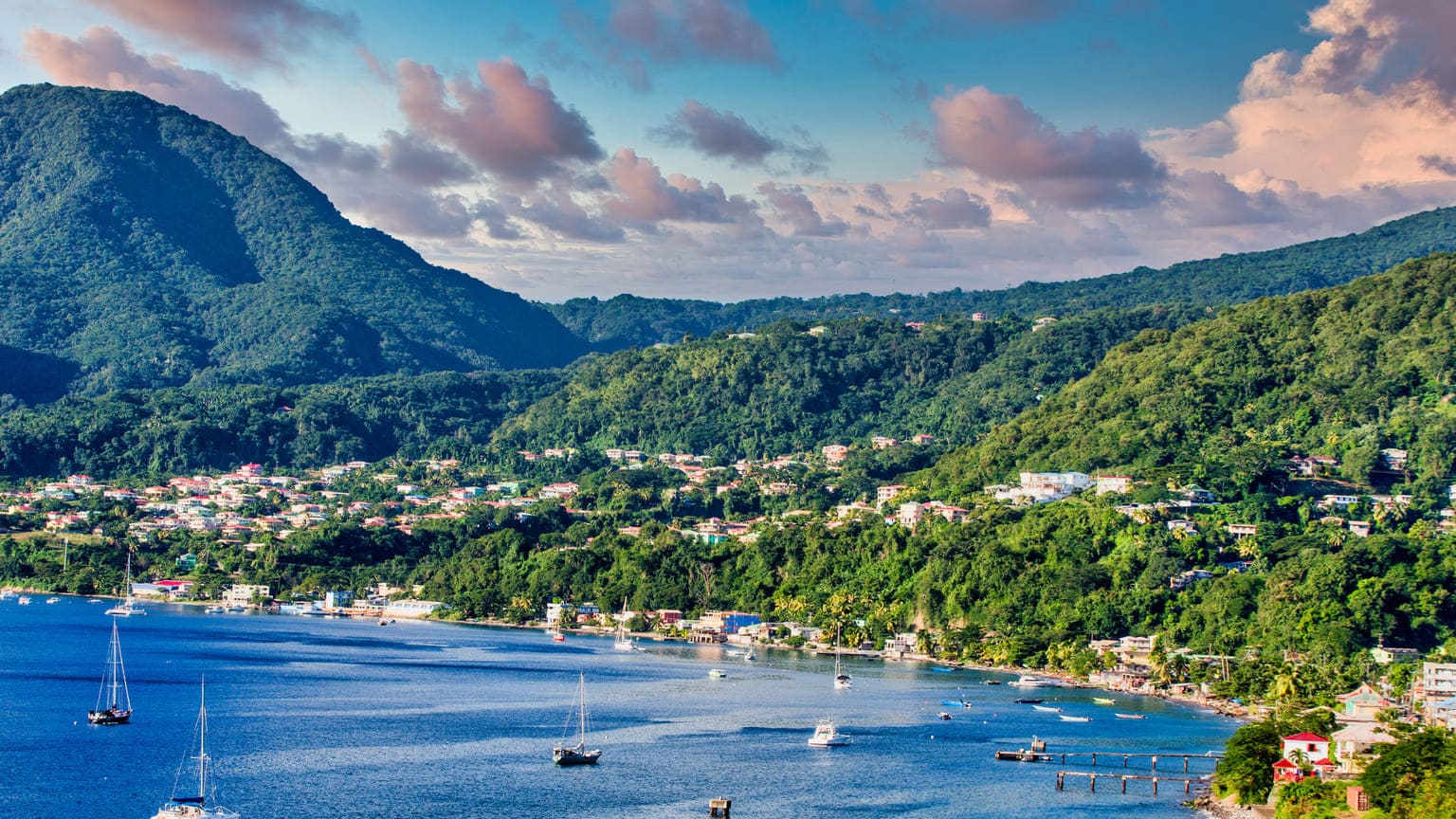
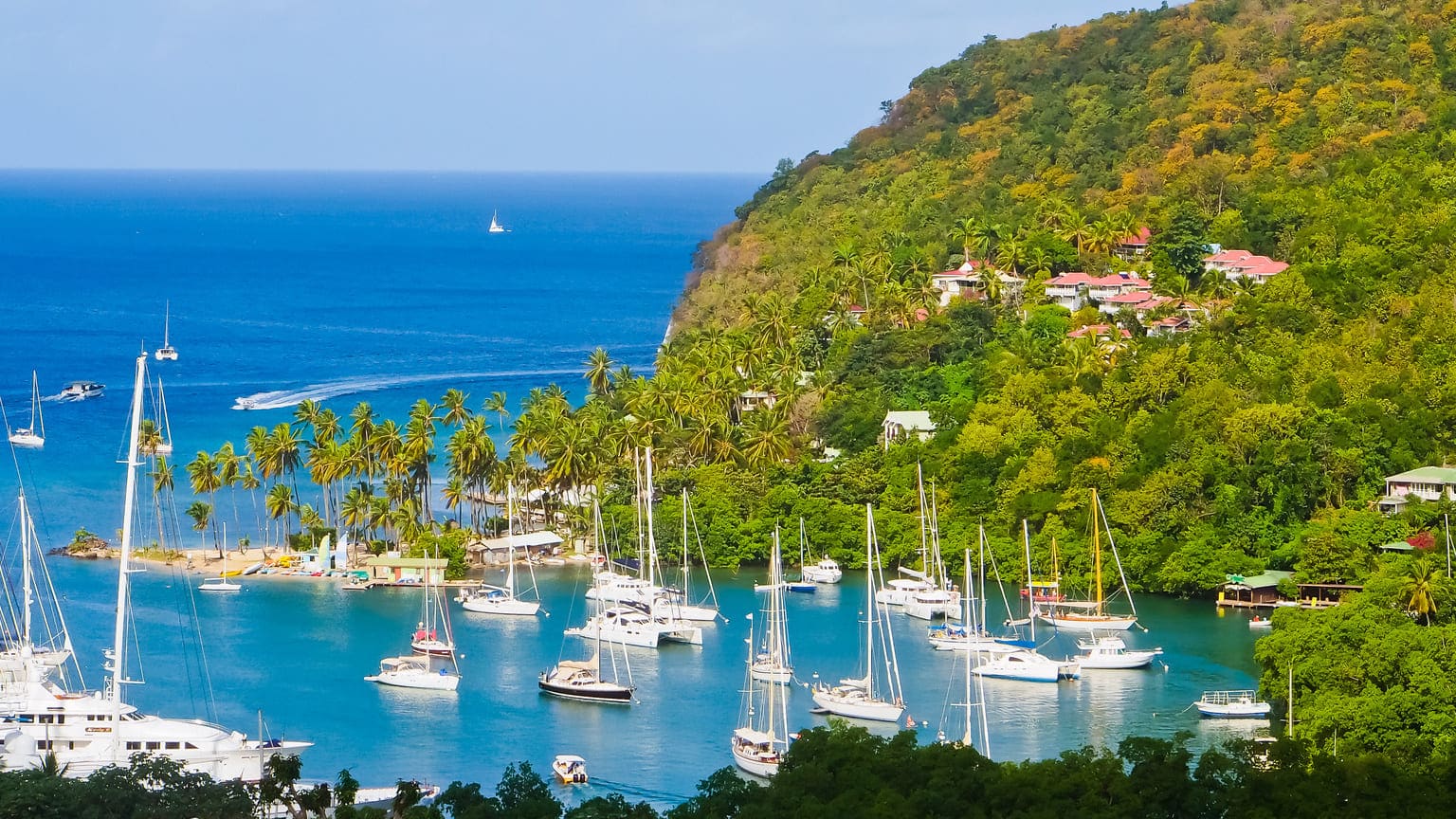
Citizenship by investment programs are offered by 5 Caribbean countries: St Kitts and Nevis, Antigua and Barbuda, Grenada, St Lucia, and Dominica.
Easiest and fastest Caribbean citizenships to obtain
Caribbean citizenship gives holders visa-free access to more than 140 countries, the opportunity to optimise taxes, and a safe haven.
The Caribbean passport can be obtained by investment with a minimum amount of $100,000. Find out what countries provide the easiest and fastest pathway to Caribbean citizenship.
Fact checked by Elena RudaElena Ruda

Fact checked by Elena Ruda
Elena helped over 500 investors’ families to choose and obtain second citizenship or residency. She knows the pros and cons of each investment option and improves the industry expertise at the company.
Reviewed by Vladlena BaranovaVladlena Baranova

Reviewed by Vladlena Baranova
Vladlena leads preparation to Due Diligence and application for citizenship or residency by investment. She performs independent and in-depth analysis of investors’ situations and indicates possible risks. Vladlena helped to get second passports and residence permits to over 300 investors from all over the world.

Article content
- 7 benefits of Caribbean citizenship
- Caribbean countries offering citizenship by investment programs
- St Kitts and Nevis: a passport with the shortest processing time
- Antigua and Barbuda: the best option for families
- Grenada: a pathway to the US
- St Lucia: various investment options to choose
- Dominica: the world’s best investment program
- Summary of the fastest and easiest Caribbean citizenship by investment
- Frequently asked questions
Hide content

7 benefits of Caribbean citizenship
Caribbean countries set different conditions for obtaining citizenship, but in general, passports of these countries offer their holders similar benefits.
1. Freedom of travelling the world. Caribbean citizens can visit more than 140 countries without obtaining a visa in advance, including the Schengen Area and the UK. Additionally, they can easily obtain US and Canada visas.
2. Tax optimisation. Caribbean tax systems do not levy the international income of their citizens and exclude taxation on wealth, inheritance, gifts, and capital gains.
3. No need to reside in the country. To get and hold citizenship in a Caribbean country, one is not required to live in the country permanently. Moreover, the passport can be obtained remotely.
4. Favourable investment environment. The Caribbean countries feature the boosting tourism industry that provides attractive investment opportunities. For example, business people can invest in marinas and the hospitality sector.
5. Safe haven. In case of unforeseen circumstances, those holding a Caribbean passport and another country's passport can find a safe haven in the Caribbean. CARICOM citizens can enter their country even if borders are closed, which highlights one of the practical advantages of dual citizenship.
6. Pleasant climate. All-year-round summer, sandy beaches, and wonderful nature make the region a great place to live or spend holidays.
7. Right to enrol in UK universities. As the Caribbean countries are part of the Commonwealth of Nations, their citizens have an opportunity to study in some UK universities and get a prestigious British education.
Caribbean countries offering citizenship by investment programs
The Caribbean passport can be obtained in different ways: by birth, naturalisation, and family ties. But the quickest and easiest way is to get citizenship by investment.
Unlike other countries that grant citizenship only after a few years of residency following the investment, the Caribbeans allow obtaining a passport once the investment is made.
Citizenship by investment programs are in place in five countries of the Caribbean community:
The program conditions in all five countries are similar, but some substantial differences can influence the investor's choice.
To choose the most appropriate program, the investor should consider the goal of obtaining the second passport, the amount they are ready to invest, and other conditions, such as additional benefits granted by the passport.
Caribbean citizenship by investment comparison chart
| Parameter | Antigua and Barbuda | Dominica | St Lucia | St Kitts and Nevis | Grenada |
| Minimum investment | $100,000 | $100,000 | $100,000 | $125,000 | $150,000 |
| Refundable investments | Yes, real estate in 5 years | Yes, real estate in 3—5 years | Yes, real estate and bonds in 5 years | Yes, real estate in 5–7 years | Yes, real estate in 5 years |
| CBI program timeframe | 3—6 months | 3—6 months | 3—4 months | 60 days to 6 months | 3—6 months |
| Visa-free countries | 149 | 143 | 144 | 150 | 145 |
| Residency requirement | 5 days within the first 5 years | None | None | None | None |
St Kitts and Nevis: a passport with the shortest processing time
A two-island country with picturesque beaches, a former British colony, and the smallest state in the western hemisphere, St Kitts and Nevis introduced its citizenship by investment program in 1984.
The main feature that differentiates St Kitts and Nevis CBI program is the opportunity for accelerated application processing. Under usual conditions, a passport can be obtained in 3—6 months, but the processing time can be reduced to 60 days for an additional fee:
- $25,000 for the main applicant;
- $20,000 per dependent aged 16 or older, including the spouse;
- $500 per dependent under 16.
Until February 1st, 2024, those choosing to contribute to the Sustainable Growth Fund have their applications processed within 60 days without an additional fee.
Investment options. To qualify, the investor should choose one of three available options:
- $125,000+ — a non-refundable contribution to the Sustainable Growth Fund. Starting from February 1st, 2024, the minimum amount will be $150,000. The total contribution amount depends on the number of family members in the application. Money is used to develop the country's healthcare, education, tourism, and culture.
- $175,000+ — the Public Benefit Option. The capital is invested in infrastructure and social real estate projects. After the project's completion, the real estate becomes the property of St Kitts and Nevis.
- $200,000+ — purchase of government-approved real estate. The investor can purchase shares in tourist infrastructure, such as apartments, hotels, and residential complexes. After 7 years, the real estate can be sold, and the investment returned. The investor can also purchase an approved private home for at least $400,000 that can be sold 5 years later.
Family participation. The program conditions allow the main investor to include in the application their spouse, dependent children under 25, dependent parents, and siblings, including those of a spouse.
Why the St Kitts and Nevis citizenship program and the country's tax system are attractive for investors
Antigua and Barbuda: the best option for families
Antigua and Barbuda is another former British colony with a highly developed economy, medicine, and education. The country consists of 3 islands and features rich tropical nature and white sandy beaches.
The Antigua and Barbuda citizenship by investment program was launched in 2013 and became the most beneficial program for families due to the special conditions it provides.
Investors can choose one of four options:
- $100,000+ — a non-refundable contribution to the National Development Fund. The minimum investment amount for families of up to 4 members is the same as for one applicant — $100,000. Families of 5 and more people have to invest $125,000. The invested money supports healthcare, education, and agricultural sectors.
- $150,000+ — a contribution to the University of the West Indies Fund. This option is offered to families of 6+ people and, if chosen, gives one of the investor’s children the right to study at the University of the West Indies free of charge for one year.
- $200,000+ — a purchase of the government-approved real estate. The program participant can buy a share, an apartment, or a villa in hotels and resort complexes. The property can be sold, and the investment can be returned 5 years after the purchase.
- $1,500,000+ — business investment. The investment can be made in a government-approved business project.
Family participation. Along with the investor and their spouse, financially dependent children under 30, parents, grandparents, and siblings also qualify for the program.
Timeframes. The Antigua and Barbuda passport is obtained in 3—6 months. All the applicants must visit the country and spend at least 5 days during the first 5 years after the citizenship acquisition.
Grenada: a pathway to the US
Grenada is a small state located on the Caribbean island with the same name that was first sighted by Christopher Columbus in 1498.
The island's location protects the country from Atlantic hurricanes, and some do not reach the island. As a result, the country suffers minimal losses and damages, which makes Grenada a good place for real estate investment.
Grenada citizens can enjoy benefits not available to other Caribbean citizens. They are eligible to obtain a US E-2 business visa and can move to the USA to live, work, do business, and study there without additional permits. Getting a 10-year US visitor visa is also easier.
Due to a visa-waiver agreement with China, Grenada citizens can visit China visa-free and are allowed to stay there for up to 30 days per year.
Investment options. The Grenada citizenship by investment program offers two investment options:
- $150,000+ — a non-refundable contribution to the National Transformation Fund. The invested money is used to support the country's healthcare, education, and agriculture sectors. The total contribution amount depends on the number of family members in the application.
- $220,000+ — a purchase of government-approved real estate. The investor can purchase a villa, an apartment, or a share in a project from a government-approved list. The property can be sold after 5 years of ownership.
Family participation. The investor can include in the application their spouse, children under 30, parents, grandparents, and siblings, including those of a spouse. All family members must be financially dependent on the main applicant.
Timeframes. The passport-obtaining procedure takes 3—6 months.
How the Grenada passport can make your travels simpler and eliminate the need for visas
St Lucia: various investment options to choose
St Lucia is a country that attracts foreigners by its picturesque views, developed infrastructure, high level of safety, and good ecology.
St Lucia’s citizenship by investment program was launched in 2015. It became one of the least expensive citizenship programs in the world, with the investment amount starting from $100,000.
Investment options. The main advantage of the program is the various investment options available to applicants:
- $100,000+ — a non-refundable contribution to the National Economic Fund. The total contribution amount depends on the number of applicants. The invested money supports the healthcare, alternative energy, education, and infrastructure sectors.
- $200,000+ — a purchase of government-approved real estate. Investors can buy shares, apartments, or villas in large five-star hotels, resorts, and marinas. The property should be owned for at least 5 years.
- $300,000+ — a purchase of government bonds. The investment is made in non-interest-bearing government bonds. The investment sum does not depend on the number of applicants. After 5 years of ownership, the bonds can be redeemed, and the investment returned.
- $1,000,000+ — business investment. The capital should be invested in a government-approved business project and create 3 jobs on the island. Possible investment objects are restaurants, cruise ports and marinas, bridges, roads, pharmaceuticals, and research facilities.
Family participation. The investor’s spouse, children under 30, parents, and siblings, all financially dependent on the investor, are also eligible for the program.
Timeframes. The application is processed for 3—4 months.
Dominica: the world’s best investment program
A tropical island country discovered by Christopher Columbus in 1493, Dominica offers a citizenship by investment program recognised as one of the best in the world.
The Dominica citizenship by investment program was introduced in 1993 and featured high visibility: the government makes regular reports on the distribution of the invested funds.
Potential investors can choose one of two options:
- $100,000+ — a non-refundable contribution to the Economic Diversification Fund. The total contribution amount depends on the number of applicants. Money is used to support education, healthcare sectors, and green energy projects.
- $200,000+ — purchase of real estate from the government-approved list. The investor can buy apartments, cottages, or shares in the projects. The conditions of the program allow selling the property after 3 years of ownership. In this case, real estate must be purchased by a non-investor. To be able to sell the property to another programme participant, the investor must retain the object for 5 years.
Family participation. The passport can also be obtained by the investor’s spouse, dependent children under 30, and parents, including those of a spouse.
Timeframes. The processing time is 3—6 months.
What unique opportunity can the Dominica investment program offer
How to get a Caribbean passport by investment
Although citizenship by investment procedures in the mentioned Caribbean countries have some peculiarities, in general, the obtaining process is similar and takes 2—6 months to get a passport.
1—2 days
Preliminary Due Diligence
A preliminary check is conducted to prepare an investor for the key stage of the programme — Due Diligence. It helps to find out if there are any obstacles to successful Due Diligence checks made by official bodies.
2—4 weeks
Document preparation
The agent collects documents for citizenship application, translates and apostilles them, and fills in government forms.
2—6 months
Due Diligence
Experts of the Citizenship by Investment (CBI) unit of the chosen country conduct Due Diligence and check the applicants’ background information in international databases. Due Diligence takes place remotely, and the investor does not need to be present.
1—3 months
Approval and fulfilment of investment condition
The applicant invests under the chosen option after successfully passing the Due Diligence check.
2—4 weeks
Receiving citizenship documents
The CBI Unit issues a passport and a naturalisation certificate and sends them to the agent’s office or the investor’s address.
Summary of the fastest and easiest Caribbean citizenship by investment
- Caribbean citizenship by investment programs are in place in 5 countries: St Kitts and Nevis, Antigua and Barbuda, Grenada, St Lucia, and Dominica. After obtaining a Caribbean passport, program participants can travel visa-free to 140+ countries.
- To get a Caribbean passport, an applicant should invest at least $100,000, depending on the program and the chosen investment option.
- Obtaining a passport usually takes 2—6 months. An accelerated procedure is available in St Kitts and Nevis, where the passport can be obtained in 6 weeks.
- Programs offer different investment options: real estate investment, non-refundable donation, purchase of government bonds, and business investment.
- Some programs provide additional benefits. For example, Grenada citizenship allows receiving a US E-2 business visa and moving to the United States for living and working there. Contributing to the University of the West Indies Fund when applying for Antigua and Barbuda citizenship allows one of the investor’s children to study at the University of the West Indies for one year without a tuition fee.
Frequently asked questions
Which Caribbean countries offer citizenship by investment?
Which Caribbean country is best for second citizenship?
5 Caribbean countries offer the opportunity to get second citizenship: St Kitts and Nevis, Antigua and Barbuda, Grenada, St Lucia, and Dominica.
To choose the most appropriate passport, the potential investor has to analyse their own goals and expenses of the programs, define the amount they are ready to invest, and choose the best investment option.
Which Caribbean passport is the easiest to obtain?
All five Caribbean passports by investment are relatively easy to obtain: the applications are processed remotely, and the investor does not have to visit the country of choice.
To obtain Caribbean citizenship by investment, the applicant must choose the country that best suits their goals, pass a Due Diligence check, and invest according to the selected option.
Which Caribbean country can you buy citizenship in?
Investors can get Caribbean citizenship in one of 5 countries: St Kitts and Nevis, Antigua and Barbuda, Grenada, St Lucia, and Dominica.
The Caribbean passport provides several benefits, such as visa-free travel to 140+ countries, tax optimisation, and a safe haven in unforeseen situations.
How to get Caribbean citizenship?
Caribbean citizenship can be obtained by different paths: by birth, by naturalisation, by marriage, and by investment.
To get a Caribbean passport by investment, a potential investor should choose one of the programs, the investment option under the selected program, pass a Due Diligence check, and make an investment.
Do investors need to move to a Caribbean country after obtaining citizenship?
No. Caribbean citizenship by investment programmes do not require investors to relocate. It is necessary to visit St Kitts and Nevis to submit biometrics, while in other countries the process is fully remote.
The investor does not need to live in the country to maintain citizenship. The exception is Antigua and Barbuda: citizens must spend at least 5 days there within the first 5 years after obtaining citizenship.

Read More


Easiest and fastest Caribbean citizenships to obtain
Share: